

Dogs are susceptible to flea infestations, which can cause discomfort and irritation. The pesky parasites attack our four-legged babies, leading to immense discomfort and several vector-borne diseases. The pests are also capable of reproducing rapidly, making it a challenge for pet parents to eliminate them. Therefore, as pet parents, it is crucial that we understand their life cycle, as this can help us break the cycle and keep our canine babies safe and healthy. In this blog, we will take a detailed look at the flea life cycle and discuss ways to help prevent and manage flea infestations in dogs.
Understanding the Life Cycle of Fleas
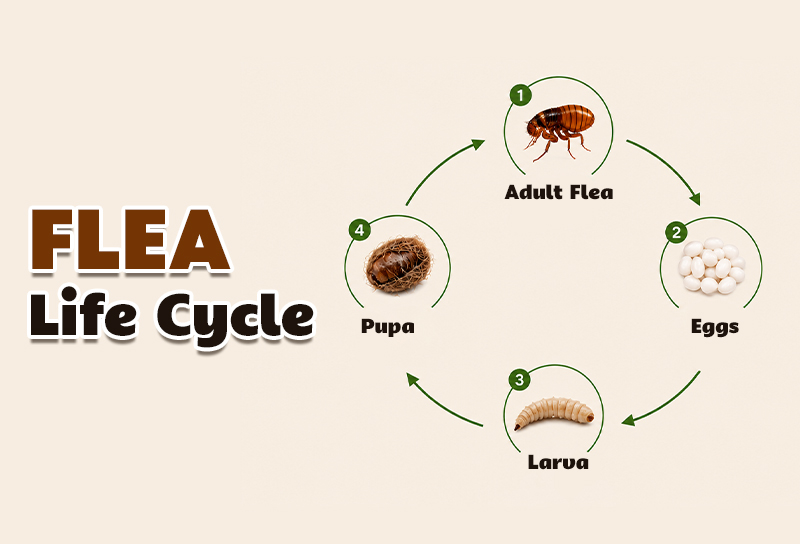
The external parasites undergo a complete metamorphosis during their four life stages: egg, larva, pupa, and adult. Let’s discuss them below.
Egg
After feeding on a blood meal, female fleas lay eggs on their host, which can then fall into the surrounding environment. The eggs can then accumulate in areas such as cracks in flooring, bedding, carpets, and other parts of the environment. A female flea can lay from approximately 40 to 800 eggs during its lifespan. The eggs can hatch within 2 to 14 days, depending on the temperature, humidity, and other environmental conditions.
Larva
Once flea eggs hatch, the larvae survive by feeding on organic matter, including adult flea feces, dead skin, and organic debris. These provide them with the nutrients they require for development. The larvae may take from 8 to 24 days to develop and enter the pupa stage. They form cocoons among dirt and debris to camouflage themselves until they develop into the next stage.
Pupa
During the pupal stage, the flea turns into an adult. This stage lasts for about a week, provided the conditions are favorable. Under unfavorable conditions, the flea can remain in the pupal stage for an extended period before emerging as an adult.
Adult
Once fleas become adults, they start feeding on the blood of their hosts, and mating and egg production follow when conditions are suitable. Thus, the cycle then continues once again with the fleas laying eggs. Adult fleas can survive from a few weeks up to a year, depending on their species and environmental conditions, and access to a host.
Prevention and Treatment of Flea Infestations in Dogs
The following are some of the effective ways for flea prevention in dogs.
- Treat your dogs with year-round flea preventives, as it is one of the most effective ways to keep the pesky bugs at bay. The treatments are formulated to kill adult fleas and prevent future infestations.
- The most popular products include Bravecto Chewable for Dogs and Simparica Trio for Dogs.
- Vacuum your furniture, carpets, rugs, and bedding regularly to help eliminate any eggs, larvae, and pupae from the environment.
- Keep a close watch on your doggo daily for signs of fleas, especially after they return from outdoor activities.
- Wash your dog’s bedding frequently using hot water and a pet-friendly disinfectant liquid to eliminate any flea eggs or larvae concealed inside it.
- Comb your dog regularly with a flea comb, as it will help eliminate adult fleas and flea dirt.
- If your home has a yard, it is essential to keep it well-maintained by mowing the grass, trimming the bushes, and eliminating leaf litter and debris, as these areas are breeding grounds for fleas to develop.
Wrapping Up
To deal with flea infestations in dogs, it is important to break their life cycle with a consistent approach that targets different stages of flea development. By keeping your home and surroundings clean and using effective flea treatments, you can break the flea life cycle and keep your home and pet protected.
At CanadaVetCare, we carry a plethora of flea preventives for dogs at discounted prices. Explore our online store to get your hands on your preferred treatments and a wide range of other pet essentials.