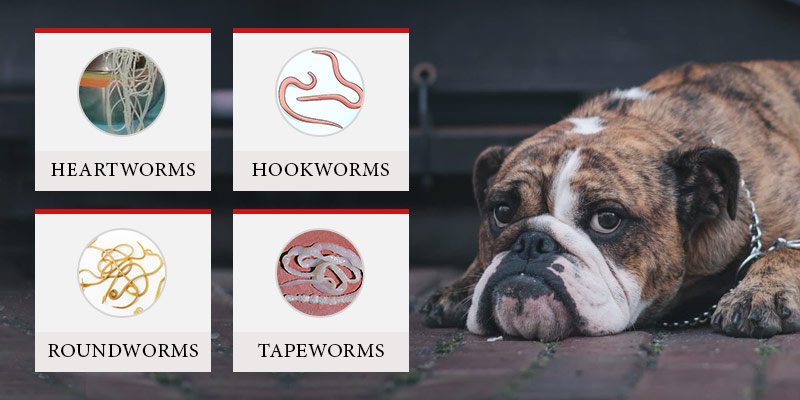

Caring for a dog is one of the most rewarding experiences for any pet parent. However, parenting a furry baby is not limited to just feeding, grooming, and playing with them. In fact, one of the most crucial parts of bringing up a dog is ensuring their good health and protecting them from gastrointestinal worms. If you’re new to dog parenthood, we’ve got you covered. In this blog, we will provide a comprehensive guide to the dog deworming schedule to ensure the optimal health of your doggo.
Let’s get started!
What is Deworming? Why Is It Important for Dogs?
Deworming is the process of eliminating intestinal worms from a pet’s body with the help of appropriate deworming formulas. The most common types of intestinal worms that affect dogs include roundworms, hookworms, and whipworms.
Deworming is essential for dogs as intestinal worms tend to affect dogs of all breeds and ages. If not eliminated on time, they can lead to several conditions such as diarrhea, vomiting, poor coat condition, weight loss, anemia, and poor growth in puppies. Heavy infestations can even become life-threatening, especially in weak and young dogs.
How Do Dogs Contract Intestinal Worms?
The most common ways dogs contract intestinal worms are:
- Ingesting infected fleas while grooming
- Consuming larvae transmitted through an infected mother’s milk (for certain types of worms)
- Ingesting larvae from infected soil
- Consuming water contaminated with larvae and worm eggs
Which Intestinal Worms Are Common in Dogs?
The following are the common intestinal worms that infect dogs.
Roundworms
Mature Size: 4 – 6 inches
Transmission: Ingestion of infected eggs from contaminated soil or infected prey
Risk: Poor Growth
Tapeworms
Mature Size: Up to 11 inches
Transmission: Ingestion of infected fleas
Risk: Intense itching around the anus
Whipworms
Mature Size: ¼ inch long
Transmission: Ingestion of infected eggs from contaminated feces or soil
Risk: Chronic Weight Loss
Hookworms
Mature Size: 1/8 inch long
Transmission: Ingestion of infected eggs from contaminated feces or soil
Risk: Severe Anemia
What are the Symptoms of Intestinal Worms in Dogs?
The following are the symptoms of worms in dogs.
- Vomiting
- Diarrhea
- Pot-bellied appearance
- Weight loss
- Lethargy
- Poor coat quality
- Bloating
- Loss of appetite
- Visible worms in the stool or around the anus
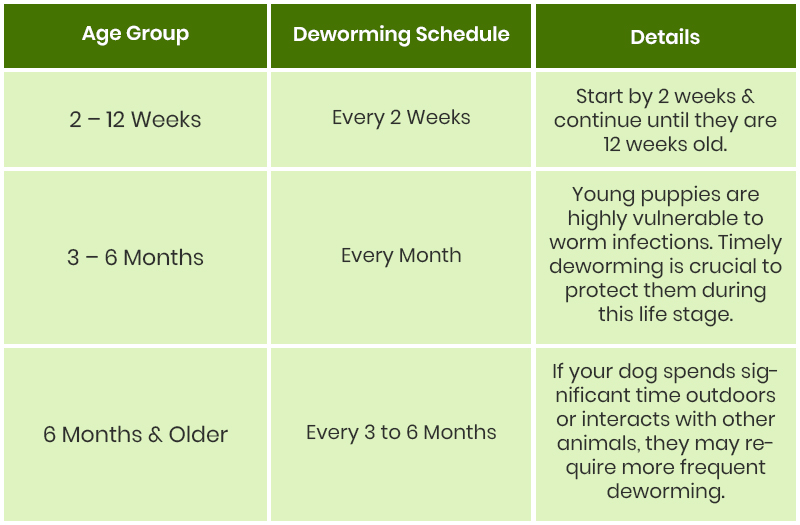
Deworming Schedule in Dogs
What are Some of the Most Effective Dewormers for Dogs?
Some of the most effective dewormers for dogs include:
- Drontal
- Milbemax
- Triworm-D Dewormer
- Paragard Allwormer
Broad-Spectrum Treatments:
- Heartgard Plus: Protects against intestinal worms and heartworms
- NexGard Spectra: Protects against intestinal worms, fleas, ticks, mites, and heartworms
- Interceptor: Protects against intestinal worms and heartworms
Parting Words
Intestinal worm infections may cause several health issues in dogs. If not managed on time, the parasites may lead to loss of appetite, poor growth, digestive upsets, poor coat condition, and even organ damage in dogs. Therefore, maintaining an effective deworming schedule helps eliminate intestinal worms from your dog’s body, ensuring their good health and a worm-free life. At CanadaVetCare, we carry a plethora of dewormers for dogs. Explore our online store to get your hands on your favorite products from the comfort of your home.