
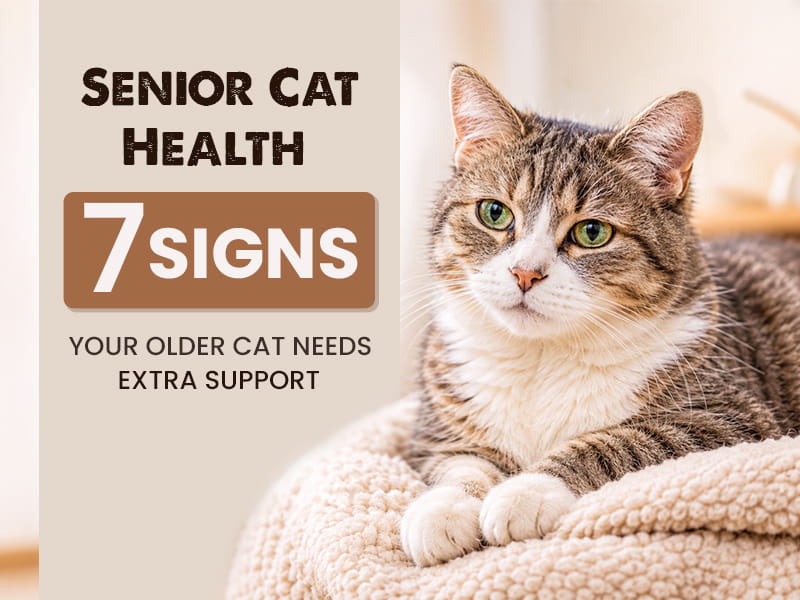
Your cat takes a little longer to get up after a nap. Or stops for a second before a jump it has made a thousand times. It’s easy to brush off, and you might assume it’s part of getting older; however, it may signal an underlying health condition.
Cats are generally considered seniors between 10 and 14 years of age. In this phase, you may notice less play and more sleeping. They may gain or lose weight, or find it harder to reach their favorite spots. With appropriate nutrition, regular vet visits, and a comfortable home environment, you can help your senior cat maintain a good quality of life.
Common Health Concerns in Older Cats and The Signs
1. Changes in Appetite and Drinking Habits
Eating less than usual? Or drinking more water than normal? Don’t just shrug them off. They can mean dental trouble, diabetes, kidney problems, or something else. A sore tooth, for example, can cause dental pain and can cause your cat to eat less.
Monitor how much the cat eats and drinks, and contact your veterinarian if you notice unusual changes.
2. Difficulty Jumping or Moving Around
Osteoarthritis and other joint problems are common in older cats. These joint conditions can make everyday movements difficult.
These changes can point to age-related joint problems. Your veterinarian may recommend a Cat Joint Care Treatment to support your cat’s mobility and overall joint health.
3. Unexplained Weight Changes
Watch for noticeable changes in your cat’s weight. Loss of weight may indicate kidney disease, diabetes, digestive problems, or thyroid issues. Weight gain usually means reduced activity, overeating, or slow metabolism.
Weigh your cat regularly as the cat gets older, and if there is a significant change in weight, consult your veterinarian.
4. Poor Grooming and Coat Changes
Cats are naturally good at grooming themselves. However, cats with arthritis, dental pain, or other conditions may not be good at grooming. You may notice matted fur, a greasy coat ot areas they cannot clean properly.
Matted fur or a dull, scruffy coat means it’s your turn to step in. Brush their coat regularly, check for anything unusual, and help your feline where required.
5. Changes in Litter Box Habits
Urinating more frequently, producing more urine, or urinating outside the litter box may indicate a urinary tract problem or another health issue. Constipation may also occur due to dehydration or other health conditions.
Keep the litter box clean and keep it in an easy-to-access area. An older cat shouldn’t have to walk a distance or struggle to climb into the litter box. Use a litter box with low sides to allow your cat to easily step inside.
6. Increased Meowing or Behavioral Changes
You may notice changes in your cat’s behavior as they age. If it won’t stop meowing, the cat may be in discomfort, confused, anxious, or in pain. If you notice new or unusual vocalizations or behavioral changes, arrange a veterinary examination rather than assuming they are age-related.
7. Low Energy and Reduced Activity
A senior cat slowing down is normal. But a sudden drop in energy may signal an underlying problem.
Watch how active your cat is and track changes in its activity level. Consult your vet if the cat becomes unusually lethargic.
Don’t Forget Parasite Control
Getting older doesn’t make a cat immune to worms. Roundworms, tapeworms, and hookworms can still cause weight loss, vomiting, and diarrhea, which are easy to mistake for normal aging. Your vet can recommend a Dewormer for Cats that suits your senior and tell you how often to use it.
Two options your vet may suggest are Drontal for Cats, an oral tablet, and Profender for Cats, a spot-on treatment applied to the skin. The right one depends on your cat and the type of worm involved.
Everyday Essentials for Older Cats
You don’t need to do anything extravagant. It’s the everyday care that makes life easier for a senior cat. Here are some essential cat care habits worth incorporating into your routine.
- Food: Choose a nutritionally balanced diet that meets their individual needs.
- Water: Leave a water bowl close to where the cat hangs out, so a drink is never a trek.
- A litter box: If the feline has to climb, stretch, or walk across the house to reach the litter box, it may start avoiding it.
- Daily brushing: It keeps mats away and helps maintain coat shape.
- A bit of play: Gentle play sessions with appropriate toys can help maintain mobility and offer mental stimulation.
- A soft bed in a quiet corner: Choose one with low sides so that the cat can step in easily.
- Regular vet visits: Routine checkups can help maintain overall health and identify potential problems early
Conclusion
As cats get older, changes in their health, behavior, and routine often mean they need a bit more from you. Recognizing these changes early can help identify health issues before they become serious and ensure the feline receives appropriate care.
Good food, preventive care, regular grooming, and routine vet visits all add up. A little extra attention now can give your cat a happier, healthier, and more comfortable life in its golden years.