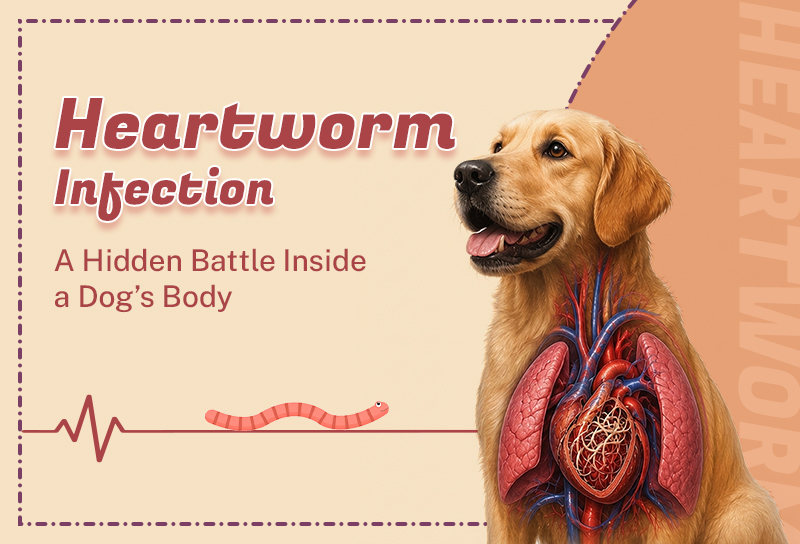
Heartworm infection is more than just a parasitic threat – it triggers a chain of changes inside your dog’s body that can quietly damage the heart, lungs, and blood vessels over time and can be fatal. What begins as a mosquito-borne infection can gradually lead to inflammation, reduced circulation, and serious strain on vital organs if left untreated.
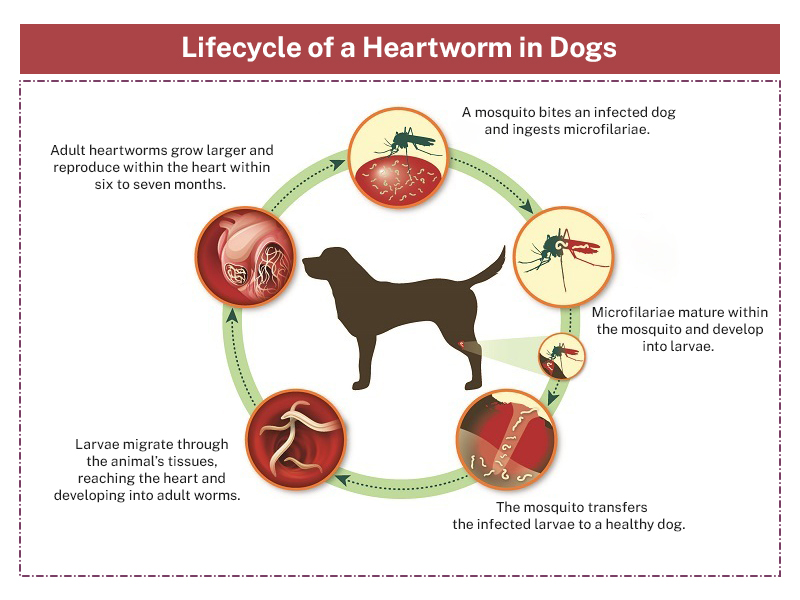
In this article, we will look at what actually happens inside the body during a heartworm infection, how the disease progresses, and why early detection and prevention matter so much for your pet’s long-term health. But before jumping forward, let’s first look at the lifecycle of heartworms to understand how they infect your dog.
From Mosquito Bite to Heartworm Disease – What Happens Inside Your Dog’s Body During Heartworm Infection?
Have you ever wondered what happens inside your dog’s body when it becomes infected with heartworms? The process begins when an infected mosquito bites a healthy dog and transfers the larvae. The infected larvae travel to the heart, arteries, and lungs, where they grow into adult worms within six to seven months.
The dog’s immune system recognizes the heartworm as a foreign invader and tries to fight it, but unfortunately, it is not designed to fight off large worms and can only protect your dog against small bacteria or viruses. The heartworm then causes inflammation and thickening of the arteries, interrupting blood flow and oxygen supply to the body. This can lead to health complications, such as coughing, vomiting, diarrhea, breathing difficulty, and a swollen belly. If left untreated, heartworm disease can also affect other critical organs, including the liver, kidneys, and lungs, and at worst can even lead to death.
Early Signs of Heartworm Infection
Here are some of the common symptoms dogs exhibit while suffering from heartworm disease:
- Weakness or lethargy
- Dry or persistent cough
- Changes in weight
- Pot-bellied appearance
- Appetite loss
- Irregular heartbeat
- Exercise intolerance
- Vomiting or diarrhea
- Breathing difficulty
Keep Your Dog Safe & Healthy
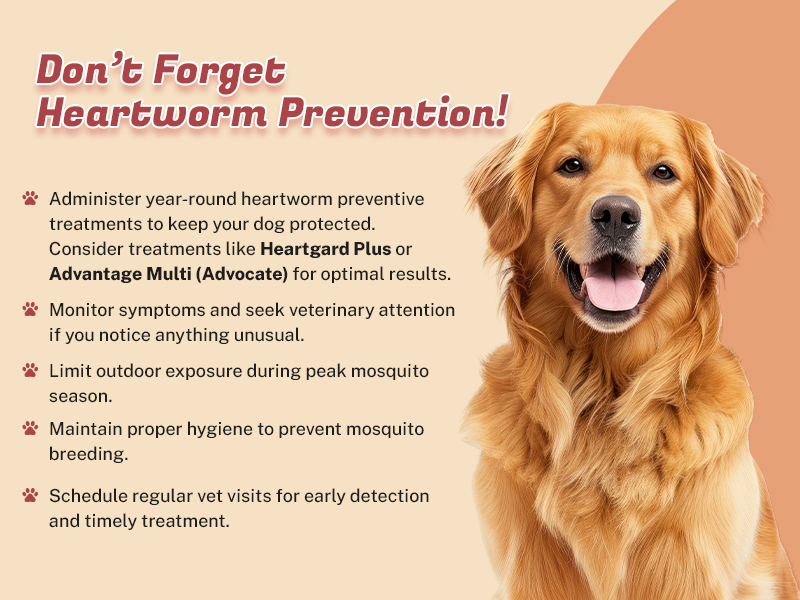
Keeping your furball protected from heartworm disease largely depends upon your understanding of the disease, ranging from the symptoms to preventive tips and proper care, including routine vet visits and ensuring proper hygiene in the house. Remember, appropriate knowledge and timely prevention are the best ways to combat this invisible and life-threatening disease and ensure your pet’s health, happiness, and safety.
Frequently Asked Questions (FAQs)
Q1. Can I give heartworm preventive to my pregnant or lactating dog?
Ans. Read the product label carefully and consult your veterinarian before administering any treatment to pregnant or lactating dogs, as some treatments might not be safe for them.
Q2. What are the early signs of heartworms in dogs?
Ans. Loss of appetite, weakness, cough, vomiting, swollen belly, breathing trouble, and weight changes are some of the initial signs of heartworm infection in dogs.
Q3. What are some of the best heartworm preventives for dogs?
Ans. Heartgard Plus, Advantage Multi (Advocate), Nuheart Generic Heartgard, Interceptor, and Valuheart are some of the popular and effective heartworm preventives for dogs.
Q4. How do veterinarians diagnose heartworm disease in dogs?
Ans. Veterinarians primarily use an antigen test to verify the presence of heartworms in dogs. Blood tests, X-rays, and echocardiography are also used to diagnose the disease.
Q5. What is the recommended treatment for heartworm-positive dogs?
Ans. The approved treatment for heartworm-positive dogs is melarsomine, which kills adult heartworms. However, this treatment should only be administered under vet supervision.